


Discover the symbols of the city
The Lighthouse of Livorno
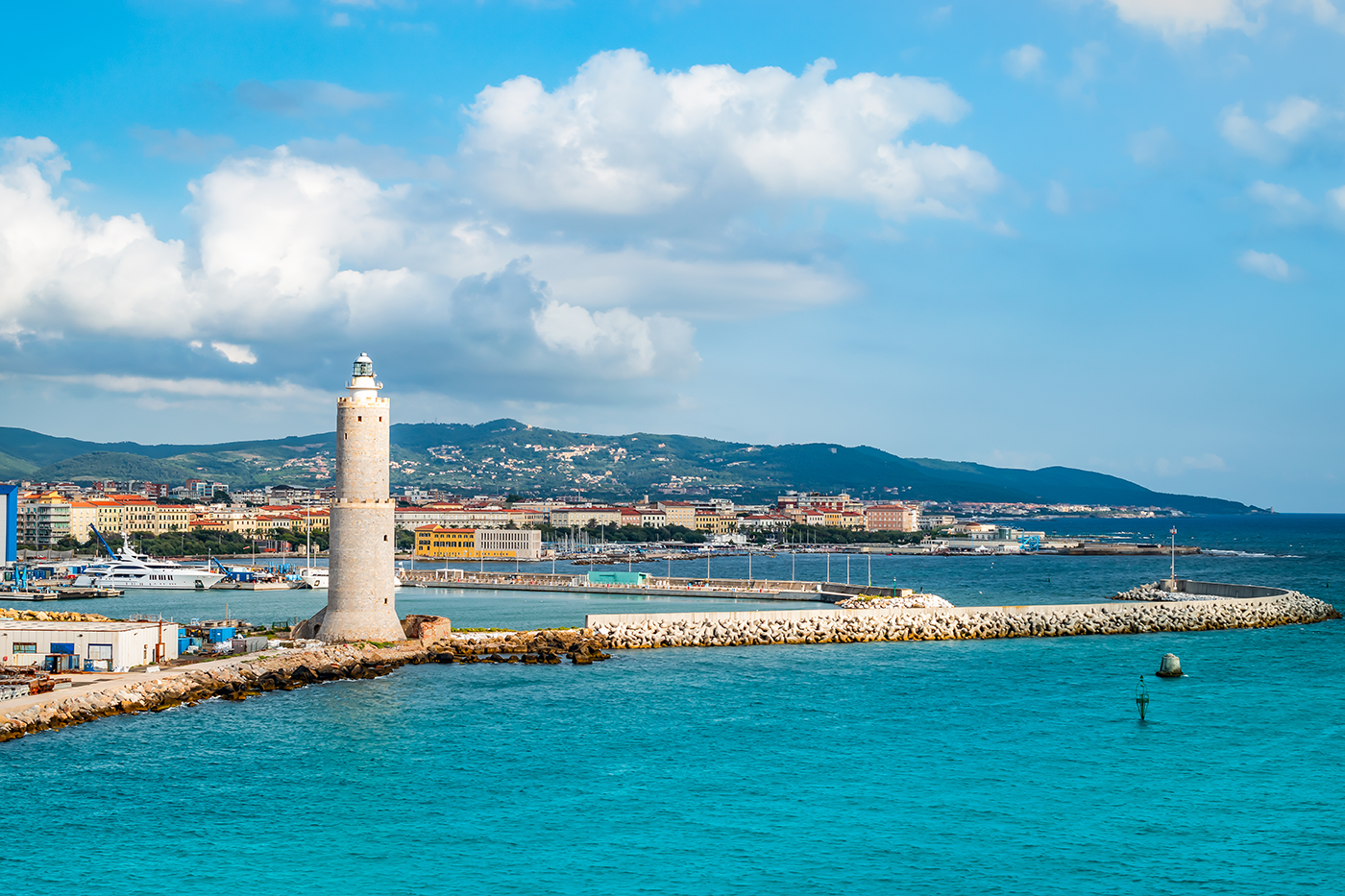
The Livorno Lighthouse, also called the “Fanale,” is a landmark that traces the history of the city back hundreds of years. It is situated along the historic streets of the Livorno Sea.
Constructed in the fourteenth century by the Republic of Pisa, the lighthouse was intended to aid navigators navigating the treacherous waters of the Tyrrhenian Sea. Over the years, tales and centuries have shaped the lighthouse’s appearance and significance.
The majestic Livorno Lighthouse, which was rebuilt following World War II destruction, is a visible representation of the seaside city’s tenacity and resolve.
From the modest buildings of Grand Duke Francesco I de’ Medici’s lazzaretto to the current structure, which rises to a height of 52 metres and dominates the horizon with its majesty, every aspect of the lighthouse narrates a tale.
A trip to the Livorno Lighthouse is an experience unlike any other, providing visitors with a physical connection to the city’s rich maritime history as well as a stunning vista.
It is wise to note, nonetheless, that access to the Lighthouse is restricted to specific times of day and seasons.
The Four Mores Monument
In the centre of Livorno is the monument dedicated to the Four Mores.
This monument, which is situated in Piazza Micheli—where the Porta Colonnella originally stood—is a representation of the city and its lengthy past.
Its history begins in 1587, when Ferdinand I de’ Medici, the Grand Duchy of Tuscany’s heir to his brother Francis I, launched the initiative to fortify Livorno and took immediate action to stop the barbarian corsaries from invading the shore.
He chose to have a monument built in his honour to commemorate these accomplishments, and he gave the sculpture Giovanni Bandini the task of making it happen.
Pietro Tacca’s statues of the Four Mori, four enchained pirates, completed the piece that at first just depicted the Grand Duke wearing the Grand Master of the Knights of Santo Stefano costume.
The figures, which depict the four ages of human life and are so realistic in their suffering faces, portray the story of prisoners who are subjected to the military might of the victor.
However, the Four Mores’ history is more than just that of a monument; it is a tale of ups and downs throughout the ages.
These monuments have witnessed Livorno’s evolution over the ages, from its founding in 1617 to its removal during the Napoleonic occupation in 1799, to the repairs and its temporary transfer during World War II.
The Four Mores have returned to their original location in front of the historic Darsena today, serving as a testament to a city that has withstood the test of time and managed to preserve its distinct identity.
Take advantage of the chance to view this remarkable landmark, which captures centuries of Livorno’s culture and history.
The Montenero Sanctuary
Perched above the coast and the city of Livorno, Montenero is well-known throughout Tuscany, particularly for its renowned Madonna delle Grazie Shrine—a place steeped in spirituality and mythology.
This hallowed site’s origins date back to 1345, when a hardy shepherd is said to have found a miraculous image of the Virgin Mary.
As time went on, the sanctuary’s reputation expanded, drawing tourists from all over the world who were hoping to receive the Blessed Virgin’s blessings.
The Sanctuary’s history is replete with amazing incidents, as the miracle of 1742, when a strong earthquake struck Livorno and the Madonna of Montenero intervened to shield and console the city.
The Sanctuary is still a popular destination for pilgrims and devotees today, who travel from all over the world to pray and reflect on the sacredness of this special location.